Guide
Historien
Westness lies on a low grassy promontory above the Bay of Swandro, on the west coast of Rousay in Orkney. The cemetery came to wider notice in October 1963, when a farmer digging a pit to bury a cow disturbed a stone-lined grave. It held the skeleton of a woman of no more than about thirty, buried with a newborn infant, along with a pair of oval "tortoise" brooches and an older Celtic brooch-pin of silver inlaid with gold, amber and red glass. That ornament, now known as the Westness brooch and made around AD 750, was likely already a treasured heirloom when it went into the ground around the mid-9th century.
The discovery prompted excavations led by the Norwegian archaeologist Sigrid Kaland, which revealed a long-used burial ground. Beneath and around the Norse graves lay an earlier Pictish cemetery of simple slab-lined inhumations without grave goods; the wider cemetery was in use across roughly the 7th to 9th centuries.
The Norse phase is what makes Westness exceptional. Alongside furnished graves, archaeologists found two boat burials, each holding an adult male laid out with weapons and tools. A boat-shaped stone setting and a nearby noust (boat shelter) were also recorded. Together the finds show a settled first-generation Norse community living, farming and burying its dead on the same shore for generations.
Hva du får se
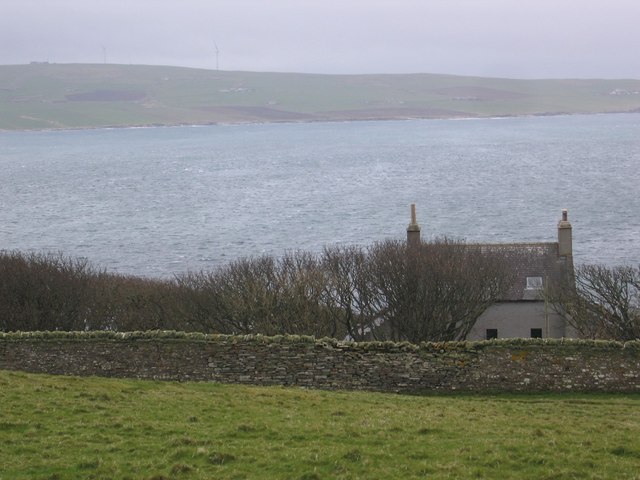
There is no visitor centre, ticket office or reconstructed monument at Westness itself: the excavated graves were recorded and backfilled, so the burial ground reads today as open coastal grassland on a low promontory above the sea. What draws visitors is the setting and the walk. The Westness Heritage Walk, a signposted coastal mile often called one of Scotland's richest stretches of archaeology, runs past the site and links a remarkable sequence of monuments, including the Iron Age Midhowe Broch and the great Neolithic Midhowe chambered cairn (housed under a modern shelter), both a short distance along the shore. Interpretation panels along the route explain the landscape and its Pictish and Norse past. The actual Westness finds, including the celebrated brooch and boat-grave objects, are held by National Museums Scotland in Edinburgh rather than on Rousay.
Besøk
Rousay is reached by a short roll-on/roll-off ferry from Tingwall on the Orkney Mainland (northwest of Kirkwall); check sailings in advance and consider taking a bike or car, as the island is hilly. The Westness Heritage Walk begins near Westness Farm on the west side of the island and is freely accessible in the open air year-round, with no admission charge; wear sturdy footwear for uneven, sometimes wet coastal ground. Midhowe Broch and the Midhowe cairn shelter lie along the same route. There is no dedicated Westness visitor centre; for ferry times, walk information and any seasonal notes, consult the official Orkney Ferries and VisitScotland/Discover Rousay pages rather than relying on unofficial listings.
Kilder
- Rousay, Westness | Canmore / trove.scot heritage record (site 2204) ↗
- Westness Burial Ground - Wikidata (Q15818508) ↗
- Boats, Brooches, and Swords: Five Viking Age Scandinavian Burials in Scotland - Dig It! (Society of Antiquaries of Scotland) ↗
- Picts and Vikings at Westness - Rousay Remembered ↗
- The Celtic brooch from Westness, Orkney, and hinged-pins - Proc. Soc. Antiq. Scot. ↗