Guide
Historien
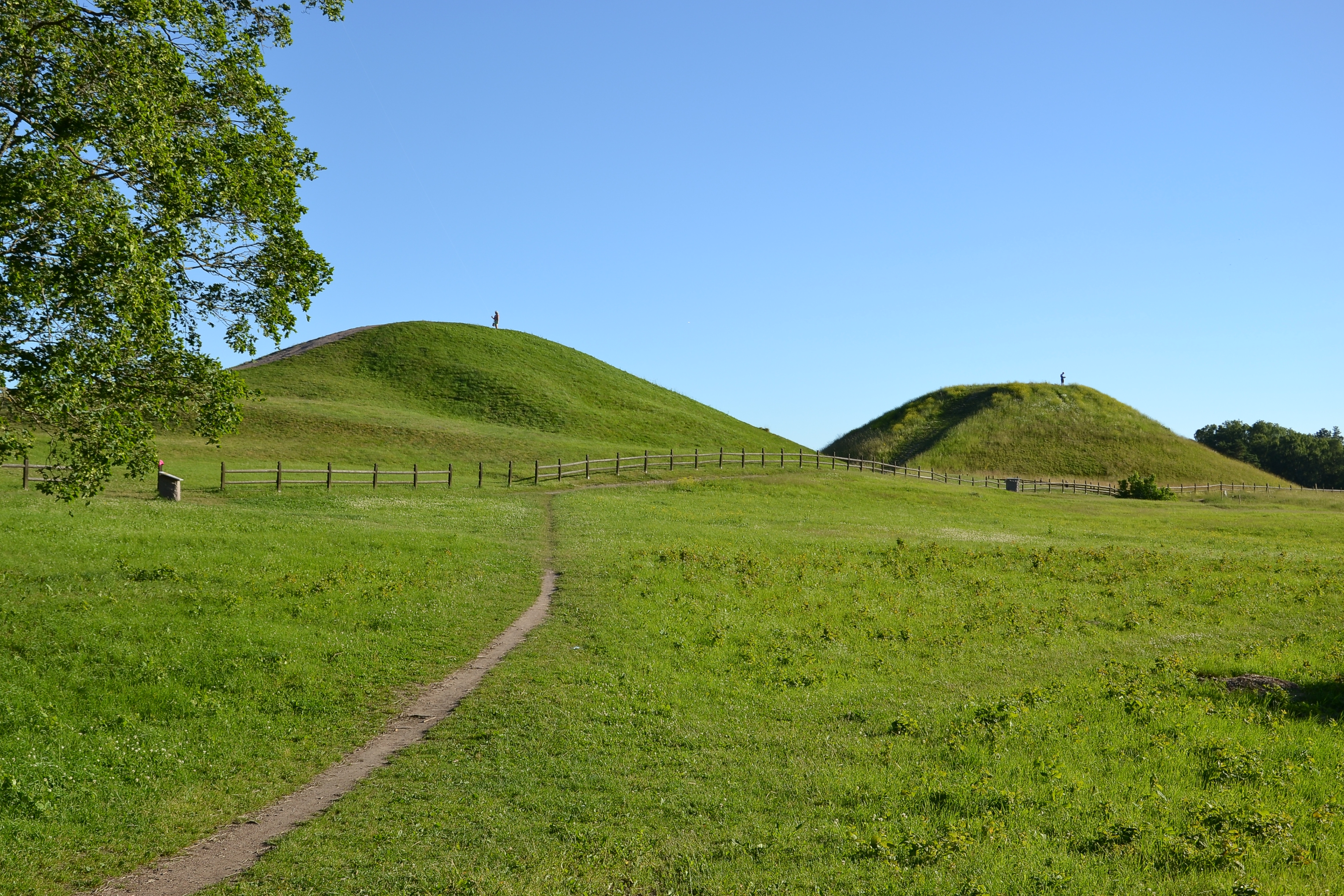
Gamla Uppsala — "Old Uppsala" — was the paramount royal and religious centre of the Svear, the people who gave Sweden its name. It rose to prominence in the Migration and Vendel periods, and its three colossal grass-covered barrows, the Kungshögar or "royal mounds," were raised around AD 550–625, when the Viking Age was still generations away. The surrounding cemetery, a settlement and a nearby line of monumental timber posts are older still, reaching back into the first millennium.
The mounds were opened in the nineteenth century. The eastern barrow, excavated in 1846, held cremated bone and sumptuous offerings — gilded fittings, imported glass and gaming pieces — while the western mound, dug in 1874, yielded a high-status cremation accompanied by continental weaponry set with gold and garnet, Roman ivory playing pieces and cameos from the Near East, evidence of contacts stretching across Europe and the Mediterranean world. Excavations from 2012 onward exposed the wider settlement and two extraordinary rows of huge wooden posts near the mounds, some postholes holding animal bone that hints at ritual.
Written sources cement its fame. In the 1070s Adam of Bremen described a golden temple here, with idols of Thor, Odin and Freyr and sacrifices held every ninth year — an account whose accuracy scholars still debate. The site also hosted the assembly of all Swedes and the Disting fair, and a stone church later rose on the spot, seat of Sweden's archbishop until 1273.
Hvad du vil se
The three great mounds still dominate a low ridge, rising some eight to ten metres and best appreciated from the footpaths that loop around them; a fourth, flat-topped mound, the Tingshögen, is traditionally the platform from which laws were proclaimed. Beside them stands Gamla Uppsala Church, a weathered stone building with a medieval interior that occupies part of the old cult site. Scores of smaller barrows freckle the surrounding grave field. The Gamla Uppsala Museum displays helmet fragments, weapons and everyday finds alongside models reconstructing the vanished halls and post monuments. Just north, the Disagården open-air museum preserves nineteenth-century Uppland farm buildings, and the timber-clad Odinsborg restaurant serves mead in horn beakers to visitors.
Besøg
Gamla Uppsala lies about five kilometres north of central Uppsala and is an easy city bus ride from the centre; Uppsala itself is roughly 40 minutes by train from Stockholm and close to Arlanda airport. The mounds, church and open grave field are outdoors and freely accessible year-round on foot. The Gamla Uppsala Museum keeps seasonal hours and charges admission, while the nearby Disagården open-air museum is generally free in summer. Confirm current opening times and prices with the operator, Upplandsmuseet, at upplandsmuseet.se before travelling. Guided tours and a self-guided app are typically offered during the warmer months.
Kilder